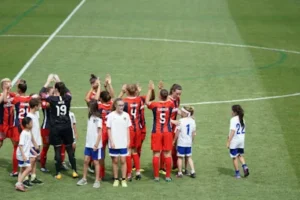
Football is the world’s most observed sport and strategic changes are quickening ahead of the 2026 World Cup. Each group is upgrading their strategies to suit cutting-edge football. The concept of essentially having solid protection or a capable assault is getting to be out of date. Groups are centering more on adjustment and adaptability. The pace of play is speedier than ever. Players have to make choices on the fly. Coaches presently get ready for matches with point-by-point arranging. This advancement has made football more competitive and intelligent.
The Modern time of high-Pressing Systems
The high-pressing framework has ended up a fundamental portion of cutting-edge football and each beat group employs it. In this framework the group presses the adversary on their claim half. The advantage is that the ball is recuperated rapidly. Players must keep up consistent development and tall vitality.

Coordination and cooperation are key components of this framework. If the squeezing line breaks down the weight on the defense is decreased. In this manner timing is of the pitch. The utilization of this strategy might heighten advancement in the 2026 World Cup.
Using a low-block Defense Strategy
The low-block defensive approach works best for teams playing against strong opponents. In this framework, the team keeps its defensive shape very compact. The main objective is to close down spaces and force the opponent into wide areas. Patience plays a very important role in this technique. Defenders maintain discipline in their positioning. This system creates opportunities for counterattacks. Weaker teams use this style to frustrate stronger teams. This strategy can be very effective at the highest level.
Promoting Possession-based Football
Possession-based football is still considered the primary style of top-class teams. In this framework, the team controls the ball and forces the opponent to chase it. Short passes and quick movements form the core structure of this system. Players need specialized skills and awareness. The main objective of this style is to control the game. It also drains the opponent’s energy. The midfield is the most important area in this strategy. Possession football will strongly influence the 2026 World Cup.
Tee Ars’s Counterattack
- The counterattack has ended up the most compelling and proficient weapon in present-day football.
- Does the group move straightforwardly from a cautious circumstance to a fast-paced assault phase?
- The speed of movement is exceptionally critical and can alter the stream of the match.
- The scarcest botch by the adversary is quickly taken advantage of.
- Fast and gifted players play a key part in this system.
Trend of Alteration in Composition
Flexible Arrangements in Advanced Football
In cutting-edge football arrangements have advanced from the unbending structures of ancient times to totally adaptable and energetic frameworks. Groups no longer depend on a settled arrangement but always alter their situation agreeing to the stream of the coordinate. This versatility gives them superior control and adjusts against diverse rivals. When a group assaults the arrangement gets to be forceful and when it guards it changes to a compact shape. This adaptability has made football quicker, more intelligent and more unpredictable.
Multi-role players and strategic Adjustments
In today’s cutting-edge football players are not restricted to playing one position but are anticipated to play different parts. Midfielders have to contribute to both protection and assault whereas wingers and full-backs moreover perform covering and protective obligations. Arrangements such as 4-3-3 and 3-5-2 are no longer inactive frameworks but experience consistent alteration according to the amusement circumstance. This flexibility makes groups stronger and more erratic making it troublesome for rivals to plan.
Strategic Adjustment in World Container 2026
Tactical flexibility will be a key figure in a high-level competition like the 2026 World Cup where coaches analyze the restricting team’s fashion and alter arrangements and strategies amid the coordination. Cautious and assaulting changes have ended up much speedier constraining groups to make fast choices.

Utilizing adaptable arrangements makes groups eccentric which is a valuable advantage against solid rivals. Groups that perform way better in tight circumstances rapidly and are more fruitful in the knockout stages.
Full Back Roll Separation
- Fullbacks play both assaulting and cautious parts in cutting-edge football.
- These players are no longer restricted to defense but moreover give bolster to the attack.
- Overlapping runs and exact crosses over wide ranges have gotten to be a vital portion of the game.
- A full back must have a tall level of stamina, speed and endurance.
- Defensive recuperation and fast following are their primary responsibilities.
The changing concept of Midfield Control
The midfield acts as the motor of football and is indeed more vital. Midfielders perform both defensive and attacking duties. They control the pace of the game as their primary role. They start creative passing and build-up plays from midfield. Defensive midfielders break the opponent’s attacks. They need both physical strength and vision. Midfield dominance often decides the result of a match. Midfield control will become the winning factor in the 2026 World Cup.
The Advanced Part of the Goalkeeper
Data Analysis and Tactical Planning
Data analysis has completely changed strategic planning in football. Teams study their opponents’ strengths and weaknesses in depth. Player performance metrics are constantly tracked. Coaches base their decisions on data insights. Match preparation now relies on a scientific approach. Set pieces and formations are also improved using data.
Fitness and High-Intensity Games
The standard of fitness in modern football has become very high. Players are required to play full matches with greater intensity. Recovery methods and training systems have improved. Speed and endurance are equally important. Load management is used to prevent injuries. Teams place a strong focus on physical conditioning.
Enhancing the role of youth talent
Young players have become a vital part of modern football. Clubs train them from an early age and develop a sense of strategy. Young players can change the game with their creativity and energy.

Their confidence and adaptability make them special. Scouts search for young talent around the world. Development academies take them to the professional level.
Conclusion
The 2026 World Cup will be the most important event in the development of football strategy. Every team will use advanced methods and innovative systems. Success depends on adaptability and flexibility. Coaches will apply new ideas and formations. The game will reach a very high level in both speed and intelligence. Tactical battles will play a major role in every match. Football is entering a new era where strategy will decide everything.